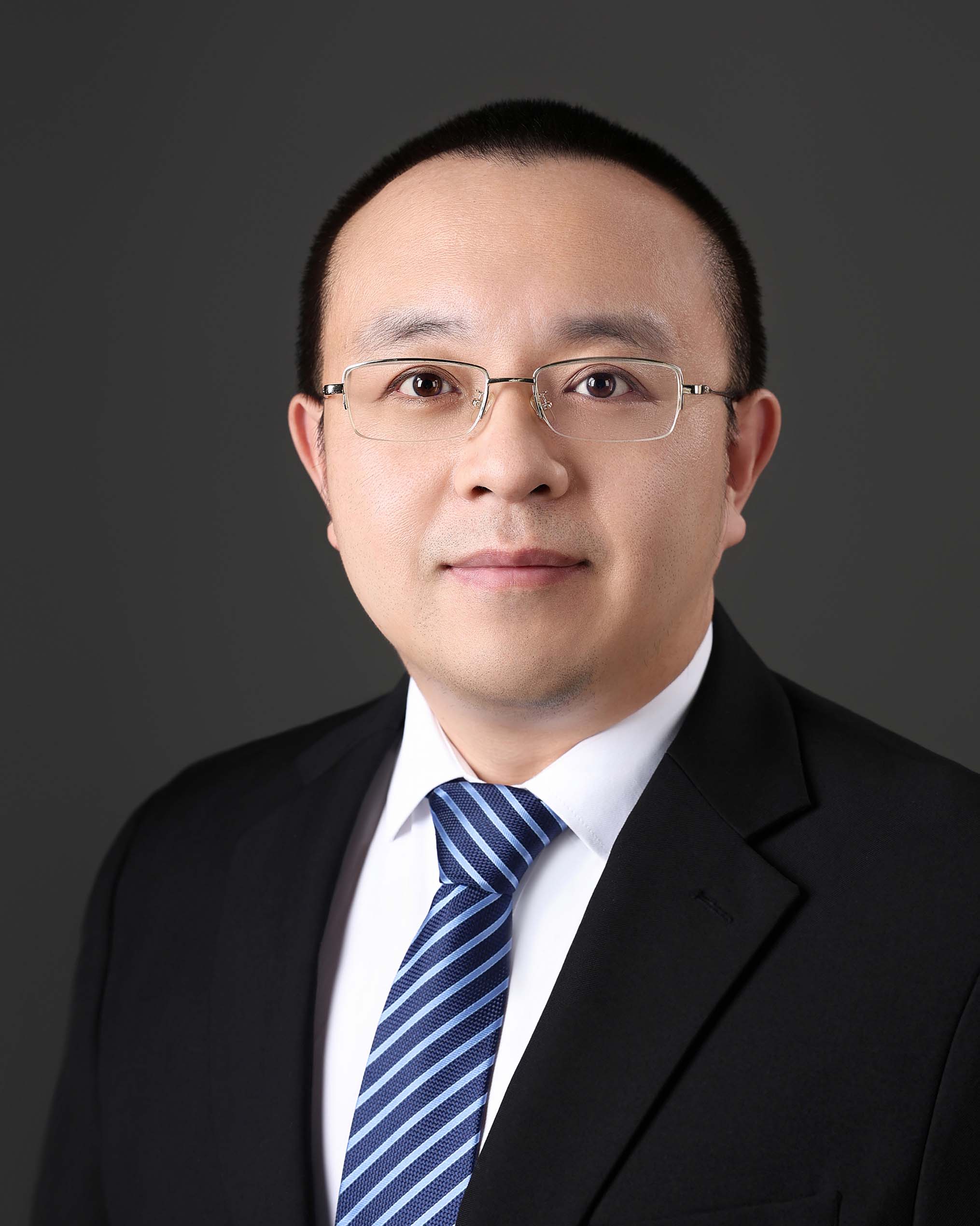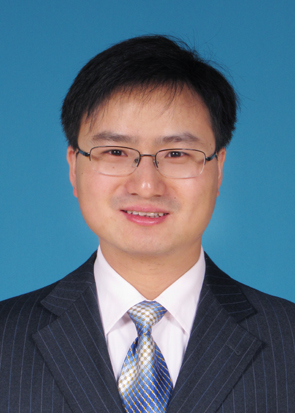
Wensheng Wei, Ph.D.
Laboratory of Genome Editing
Professor, School of Life Sciences at Peking University
tel:
E-mail:wswei@pku.edu.cn
1.Genome editing and high-throughput functional genomics
2.Molecular mechanisms of host response to microbial pathogenicity
3.Molecular mechanisms of cancer and other human diseases
Wei group is interested in studying the molecular mechanisms of human diseases, especially the host response to microbial pathogenicity. The combination of forward and reverse genetic means is employed, often in a high-throughput fashion, for the identification of host genes of interest. Efforts have also been put into the development and application of eukaryotic gene editing techniques, such as TALENs and CRISPR/Cas9 systems.
Development of high-throughput screening based on genome editing technology. This high-impact work has much broader application in the functional identification of genes involved in variety of biological pathways and mechanisms. Using this technique, we has also successfully identified and clarified the essential membrane receptor proteins for Hepatitis C viral infection.
Development of novel technology termed ULtiMATE for the fast and efficient assembly of TAL effectors for the application in genome editing.
Complete decoding of TALE RVDs. Complete information regarding the DNA recognition preference of all potential RVDs of TALE will potentially improve the application of TAL effectors in bioengineering and precision therapy.
Identification of theClostridium difficiletoxin B’s receptor. Toxin B (TcdB) is the key virulence factor forC. difficileinfections (CDIs), the most significant antibiotics-resistance associated disease worldwide. The searching of TcdB receptor has been lasted for over 30 years. This is the first identification of such receptor, which has profound importance for better understanding and novel therapeutics of CDIs.
Zhang XX, Zhang X, Ren JW, Li JY, Wei XX, Yu Y, Yi ZY, Wei WS. (2025) Precise modelling of mitochondrial diseases using optimized mitoBEs. Nature, 639: 735-745.
Wu ZH,Shi JH,Lamao QZ,Qiu YY,Yang JX,Liu Y,Liang FF,Sun X,Tang W,Chen CY,Yang QM,Wang CM,Li ZF,Zhang HX,Yang ZH,Zhang YY,Yi YY,Zheng XF,Sun Y,Ma KY,Yu LL,Yang HH,Wang ZX,Zheng WJ,Yang L,Zhang ZX,Zhang YJ,Wu ZQ,Wang Y,Wong CCL,Jin M,Yuan PF,HanWD,Wei WS.(2025)Glycan shielding enables TCR-sufficient allogeneic CAR-T therapy. Cell, 188: 6317-6334.
Liu Y, Liu YS, Niu XR, Chen A, Li YZ, Yu Y, Mo BR, Liu ZH, Xu T, Cheng J, Wu ZG, Wei WS. (2025) Massively parallel interrogation of human functional variants modulating cancer immunosurveillance. Signal Transduct. Target. Ther., 10: 88.
Shen Y, Li BH, Dong L, Tang W, Ren JW, Chen F, Zheng WJ, Yu Y, Gao L, Wei WS. (2025) Self-splicing RNA circularization facilitated by intact group I and II introns. Nat. Commun., 16: 7376.
Li YZ, Xu T, Ma HZ, Yue D, Lamao Q, Liu Y, Zhou Z, Wei WS. (2025) Functional profiling of serine, threonine and tyrosine sites. Nat. Chem. Biol., 21: 532-543.
Chen YJ, Shi YJ, Zuo XY, Dong XJ, Xiao X, Chen L, Xiang ZC, Ren LL, Zhou Z, Wei WS, Lei XB, Wang JW. (2025) UNC0638 inhibits SARS-CoV-2 entry by blocking cathepsin L maturation. J. Virol., 99: e0074125.
Shi XX, Liu K, Tian YC, Bi XY, Zhang JK, Ma FY, Wei WS, Zhao TB. (2025) Huaier suppresses lung cancer by simultaneously and independently inhibiting the antioxidant pathway SLC7A11/GPX4 while enhancing ferritinophagy. Cell Death Discov., 11: 309.
Yi ZY , Zhang XX , Tang W , Yu Y , Wei XX, Zhang X, Wei WS. (2024) Strand-selective base editing of human mitochondrial DNA using mitoBEs. Nat. Biotechnol., 42: 498-509.
Wu ZG , Lamao Q, Gu MC, Jin XX, Liu Y, Tian F, Yu Y, Yuan PF, Gao SX, Fulford TS, Uldrich AP, Wong CCL, Wei WS. (2024) Unsynchronized butyrophilin molecules dictate cancer cell evasion of Vγ9Vδ2 T-cell killing. Cell. Mol. Immunol., 21: 362-373.
Yi ZY, Zhang XX , Wei XX, Li JY, Ren JW, Zhang X, Zhang YK, Tang HX, Chang XW, Yu Y, Wei WS. (2024) Programmable DNA pyrimidine base editing via engineered uracil-DNA glycosylase. Nat. Commun., 15: 6397.
Bao Y, Wei WS. (2024) Protocol for high-throughput screening of functional lysine residues in cell fitness. STAR Protoc., 5: 103418.
Zhang XX, Yi ZY, Tang W, Wei WS. (2024) Streamlined process for effective and strand-selective mitochondrial base editing using mitoBEs. Biophys. Rep., 10: 191-200.
Pan Q, Zhang ZX, Xiong YF, Bao Y, Chen TX, Xu P, Liu ZH, Ma HZ, Yu Y, Zhou Z, Wei WS. (2024) Mapping functional elements of the DNA damage response through base editor screens. Cell Rep., 43: 115047.
He X, Liu YS, Gao X, Tang FY, Tian YX, Gong SY, Shen J, Wang AM, Sun LQ, Wei WS, Weng L. (2024) N-terminal acetylation of transcription factor LIP induces immune therapy resistance via suppression of PD-L1 expression in non-small cell lung cancer. J ImmunoTher. Cancer, 12: e009905.
Yi ZY, Zhao YX, Yi ZX, Zhang YJ, Tang GB, Zhang XX, Tang HX, Zhang W, Zhao Y, Xu HY, Nie YY, Sun XQ, Xing LJ, Dai L, Yuan PF, Wei WS. (2023) Utilizing AAV-mediated LEAPER 2.0 for programmable RNA editing in non-human primates and nonsense mutation correction in humanized Hurler syndrome mice. Genome Biol., 24: 243.
Bao Y, Pan Q, Xu, Liu ZH, Zhang ZX, Liu YS, Xu YY, Yu Y, Zhou Z, Wei WS. (2023) Unbiased interrogation of functional lysine residues in human proteome. Mol. Cell, 83: 4614-4632.
Ma KY, Wang X, Wu LJ, Yu LL, Ye JH, Li XL, Geng LL, Shi ZY, Yang HH, Zhang XJ, Zhang YJ, Wu SC, Yuan PF, Zhang YC, Dong F, Hao S, Hu LP, Wei WS, Fang RG, Cheng T. (2023) CEA cell adhesion molecule 5 enriches functional human hematopoietic stem cells capable of long-term multi-lineage engraftment. iScience, 26: 108561.
Mi L, Shi M, Li Y.X., Xie G, Rao X, Wu D, Cheng A, Niu M, Xu F, Yu Y, Gao N, Wei WS, Wang X, Wang Y. (2023) DddA homolog search and engineering expand sequence compatibility of mitochondrial base editing. Nat. Commun. 14: 874.
Yi ZY, Qu L, Tang HX, Liu ZH, Liu Y, Tian F, Wang CH, Zhang XX, Feng ZQ, Yu Y, Yuan PF, Yi ZX, Zhao YX, Wei WS. (2022) Engineered circular ADAR-recruiting RNAs increase the efficiency and fidelity of RNA editing in vitro and in vivo. Nat. Biotechnol., 40: 946-955.
Lu SY, Yang CY, Tang C, Yang Y, Yu WH, Wang JB, Zhou YN, Huang Q, Yisimayi AYJ, Liu S, Huang WJ, Cao YL, Wang YC, Zhou Z, Peng XZ, Wang JW, Xie XL, Wei WS. (2022) Circular RNA vaccines against SARS-CoV-2 and emerging variants. Cell, 185: 1728-1744.
Liu Y, Ding B, Zheng LN, Xu P, Liu ZH, Chen Z, Wu PY, Zhao Y, Pan Q, Guo Y, Wang W, Wei WS. (2022) Regulatory elements can be essential for maintaining broad chromatin organization and cell viability. Nucl. Acids Res., 50: 4340-4354.
Wei WS, Gao CX. (2022) Gene editing: from technologies to applications in research and beyond. Sci. China-Life Sci., 65: 657-659.
Li GL, Li XY, Zhuang SK, Wang LR, Zhu YF, Chen YC, Sun W, Wu ZG Zhou Z, Chen J, Huang XX, Wang J, Li DL, Li W Wang HY, Wei WS. (2022) Gene editing and its applications in biomedicine. Sci. China-Life Sci., 65: 660-700.
Guo SJ, Chen YO, Liu JZ, Zhang XY, Liu ZH, Zhou Z, Wei WS. (2022) Low-density lipoprotein receptor-related protein 1 is a CROPs-associated receptor for Clostridioides difficile toxin B. Sci. China-Life Sci., 65: 107-118.
Zhu SY, Liu Y, Zhou Z, Zhang ZY, Xiao X, Liu ZH, Chen A, Dong XJ, Tian F, Chen SH, Xu YY, Wang CH, Li QH, Niu XR, Pan Q, Du S, Xiao JY, Wang JW,Wei WS. (2022) Genome-wide CRISPR activation screen identifies candidate receptors for SARS-CoV-2 entry.Sci. China-Life Sci., 65: 701-717.
Xu P Liu ZH, Liu Y, Ma HZ, Xu YY, Bao Y, Zhu SY, Cao ZZ, Wu ZG, Zhou Z,Wei WS. (2021) Genome-wide interrogation of gene functions through base editor screens empowered by barcoded sgRNAs.Nat. Biotechnol., 39: 1403-1413.
Zhou Z, Zhang XY, Lei XB, Xiao X, Jiao T, Ma RY, Dong XJ, Jiang Q, Wang WJ, Shi YJ, Zheng T, Rao J, Xiang ZC, Ren LL, Deng T, Jiang ZF, Dou ZX,Wei WS, Wang JW. (2021) Sensing of cytoplasmic chromatin by cGAS activates innate immune response in SARS-CoV-2 infection.Signal Transduct. Target. Ther., 6: 382.
Ding B, Liu Y, Liu ZH, Zheng LN, Xu P, Chen Z, Wu PY, Zhao Y, Pan Q, Guo Y,Wei WS, Wang W. (2021) Noncoding loci without epigenomic signals can be essential for maintaining global chromatin organization and cell viability.Sci. Adv., 7: eabi6020.
Liang YS, Zhang GG, Li QH, Han L, Hu XY, Guo Y, Tao WY, Zhao XM, Guo MZ, Gan TY, Tong YM, Xu YF, Zhou Z, Ding Q,Wei WS, Zhong J. (2021) TRIM26 is a critical host factor for HCV replication and contributes to host tropism.Sci. Adv., 7: eabd9732.
Bei Wang, Ying Yu, Yong Sheng, Deli Song, Zhihan Zhao, Xuran Niu, Huixian Tang, Yuanyuan Qiu, Yuxuan Liu, Feng Chen, Xuanxuan Ji, Jinxin Yang, Wei Tang, Lei Xi, Zhixuan Zhang, Yangfang Xiong, Ziying Yan, Gexing Liu, Xiaoxu Wei, Rong Yang, Zixu Gao, Xiwen Chang, Yanglong Sun, Jiwu Ren, Aojie Zhang, Hongbo Su, Xinpeng Chen, Bohan Li, Jiayi Li, Lu Wang, Xiaoyan Liu, Zimeng Cao, Binrui Mo, Wanying Feng, Yue Yang, Yuxuan Xie